RSS

Author Archives: Dr. Grover B. Proctor, Jr.

What Sweeter Music?

The Timeless Music about Christ’s Birth

In this post, I am giving you a gift of Nativity music from my heart, which I hope you will enjoy and be inspired by. While music about the birth of Jesus is played and sung almost exclusively in December the world over, I’d like to make what some will see as a radical suggestion — that Christians use it in worship all year round, 365 days a year.

After all (as everyone from the Catholic and Jewish Encyclopedias to countless Protestant Commentaries all agree) we have no certain and unimpeachable knowledge as to when He was born — although it seems extremely unlikely that it was December 25.

The date of the birth of Jesus was never revealed to us, which in and of itself raises the question of whether we were intended to observe it at all. But that hasn’t stopped speculation throughout the last 2000 years. It seems to have been in Egypt after 200 A.D. when the very first feast of the Nativity was held, and Bishop Clement of Alexandria noted that the church there “curiously” selected the date of May 20, “apparently out of thin air.”

In modern times, because so much of the earthly ministry of Christ (our Passover) was linked to God’s Holy Days, some theologians have suggested He may have been born on the first day of the Feast of Tabernacles, and therefore circumcised on the 8th and Last Great Day of the Feast. It’s symbollically appealing, but (again) there is no evidence or proof.

Jonathan Cahn

Jonathan Cahn

More recently, a new and compelling theory of the birth date of Christ has come from Jonathan Cahn, the Messianic Jewish author of the best-selling books The Harbinger, The Harbinger 2, and The Mystery of the Shemitah. Drawing research from such widely diverse sources as the Talmud, the Dead Sea Scrolls, the Greco-Roman astronomer and astrologer Ptolemy, the Vatican document archives, and numerous Scriptural references from both Testaments, Cahn believes that the most doctrinally, historically, and prophetically sound choice is Nisan 1 — the first day of the first month of the Hebrew sacred calendar — which falls each year somewhere from late-March to early-April in the Western calendar. (If you have an interest in hearing Cahn’s 30-minute explanation of his remarkable reasoning and findings, click here to watch his video.)

We Simply Don’t Know

Even with such interesting theories to choose from, the fact is that we simply do not know for certain when Christ was born.

Celebrating the FACT of His birth — taken in tandem with what His birth means for our personal salvation and eternal lives — seems far more important than celebrating solely on a day that seems highly unlikely to be the anniversary of it. So might we agree to use the Nativity story for worship at any time of the year, employing all of the glorious music written about it — regardless of our own theory as to the true day of His birth? This is literally, I hope, a “timeless” suggestion.

With that in mind, here are four works that are (in my opinion) up there among the greatest Nativity carols/arias/performances/recordings that I have ever encountered. While this article offers only four of them, I may well add more as time goes by.

As always, it will be true for each of these video/audio files that good quality headphones are almost mandatory, in order to appreciate the subtleties and nuances of the performances.
(I’ve given the complete lyrics for each selection at the bottom of this post, in case you want to follow along.)

ONE   “Mary Did You Know” (Pentatonix)

This first selection was originally a gospel song that many have come to love. Of the 15+ recordings of it I have heard, this performance is by far and away the most pure, inspirational, tender, and beautiful. It is performed with precision laced with abundant feeling by the a cappella specialists Pentatonix. The amazing musical climax they provide — beginning (at 2:20) with Jesus being “the Lord of all Creation” and ending with (most emphatically, at 2:48) the revelation He Himself made that He was “the Great I AM” — reflects and summarizes the most astonishing of all the aspects of the earthly-yet-eternal life of the Christ.

“Mary Did You Know” by Pentatonix

TWO   “What Sweeter Music” (John Rutter)

This gem is a modern setting of the 17th-century poem “A Christmas Carol” by Robert Herrick. And you may find, as Adrianne and I do, this to be one of the sweetest and most beautiful carols ever. Composer John Rutter is renowned for his short pieces about the birth of Christ, and he may have reached his pinnacle with this one. He is conducting his own Cambridge Singers here, in what is almost certainly the most moving, jewel-like performance of it on record.

“What Sweeter Music” by John Rutter and the Cambridge Singers

THREE   “Sweet Is the Song the Virgin Sang” (Ralph Vaughan Williams)

This sweet lullaby comes from a larger work, a cantata telling the entire story of the Nativity called Hodie (This Day), written by English composer Ralph Vaughan Williams. I strongly commend the entire hour-long masterpiece to you, but here I’m giving you one short section only — the endearingly sweet lullaby of Mary as she “ponders in her heart” the mystery of her being the mother of the Savior of the world. Sir David Willcocks conducts the Choristers of Westminster Abbey and the London Symphony Orchestra in this classic 1965 recording. The soloist is the incomparable Dame Janet Baker.

“Sweet Was the Song the Virgin Sang” by Ralph Vaughan Williams
Dame Janet Baker, Choristers of Westminster Abbey

FOUR   “All My Heart This Night Rejoices” (Alfred Deller)
Alfred Deller

Alfred Deller

2016 marked the 350th anniversary of the writing of this traditional chorale by German composer Johann Ebeling. I freely admit to having a sentimental attachment to this recording, performed by countertenor Alfred Deller. As far back in ancient history as my college days, I fell in love with Deller’s beautiful singing, his lyrical phrasings, the gentle counterpoint of the accompaniment as played by lutenist/guitarist Desmond Dupré, as well as the carol’s endearing message and the music’s graceful lilt. Some may be taken aback by hearing a man sing with such a high-pitched voice, but the countertenor (sometimes called male alto) voice has a long and distinguished history in Western music. (Mark Deller, Alfred’s son, is also one of England’s foremost countertenors.) If you think about it, our popular music also includes men with equally high ranges — but none, I would suggest, are as simply beautiful as Deller’s.

“All My Heart This Night Rejoices” by Alfred Deller

Lyrics

ONE   Mary Did You Know” (Pentatonix)

Mary did you know that your baby boy would one day walk on water?
Mary did you know that your baby boy would save our sons and daughters?
Did you know that your baby boy has come to make you new?
This child that you delivered will soon deliver you.

Mary did you know that your baby boy will give sight to a blind man?
Mary did you know that your baby boy will calm the storm with his hand?
Did you know that your baby boy has walked where angels trod?
When you kiss your little baby, you kiss the face of God.

Mary, did you know?

The blind will see, the deaf will hear, the dead will live again.
The lame will leap, the dumb will speak the praises of the Lamb.

Mary did you know that your baby boy is Lord of all creation?
Mary did you know that your baby boy would one day rule the nations?
Did you know that your baby boy is heaven’s perfect Lamb?
That sleeping child you’re holding is the great I AM !

(lyrics by Mark Lowry)


TWO   “What Sweeter Music” (John Rutter)

What sweeter music can we bring
Than a carol, for to sing
The birth of this our heavenly King?
Awake the voice! Awake the string!

Dark and dull night, fly hence away,
And give the honor to this day,
That sees December turned to May.

Why does the chilling winter’s morn
Smile, like a field beset with corn?
Or smell like a meadow newly-shorn,
Thus, on the sudden? Come and see
The cause, why things thus fragrant be:
‘Tis He is born, whose quickening birth
Gives life and luster, public mirth,
To heaven and the under-earth.

We see him come, and know him ours,
Who, with his sunshine and his showers,
Turns all the patient ground to flowers.
The darling of the world is come,
And fit it is, we find a room
To welcome him. The nobler part
Of all the house here, is the heart.

Which we will give him; and bequeath
This holly and this ivy wreath,
To do him honour, who’s our King,
And Lord of all this revelling.

What sweeter music can we bring,
Than a carol for to sing
The birth of this our heavenly King?

(“A Christmas Carol” by Robert Herrick)


THREE   “Sweet Was the Song the Virgin Sang” (Vaughan Williams)

But Mary kept all these things,
and pondered them in her heart.

Sweet was the song the Virgin sang,
When she to Bethlem Juda came
And was delivered of a Son,
That blessed Jesus hath to name:
“Lulla, lulla, lulla-bye,
Sweet Babe,” sang she,
And rocked him sweetly
on her knee.

“Sweet Babe,” sang she, “my son,
And eke a Saviour born,
Who hath vouchsafèd from on high
To visit us that were forlorn:
“Lalula, lalula, lalula-bye,
Sweet Babe,” sang she,
And rocked him sweetly
on her knee.

(anonymous Medieval lyrics)


FOUR   “All My Heart This Night Rejoices” (Alfred Deller)

All my heart this night rejoices,
As I hear,
Far and near,
Sweetest angel voices.
“Christ is born,” their choirs are singing,
Till the air
Everywhere
Now with joy is ringing.

Hark! a voice from yonder manger,
Soft and sweet,
Doth entreat,
“Flee from woe and danger.
Brethren come, from all doth grieve you
You are freed,
All you need
I will surely give you.”

Come then, let us hasten yonder;
Here let all,
Great and small,
Kneel in awe and wonder.
Love Him who with love is yearning;
Hail the Star
That from far
Bright with hope is burning!

Thee, dear Lord, with heed I’ll cherish,
Live to Thee,
And with Thee
Dying, shall not perish;
But shall dwell with Thee for ever,
Far on high
In the joy
That can alter never.

(original German lyrics by Paul Gerhardt, 1607-1676)

COPYRIGHT 2015, 2017, 2021 DR. GROVER B. PROCTOR, JR. — ALL RIGHTS RESERVED
 
Leave a comment

Posted by on December 18, 2015 in Worship


Tags: , , , , , , , , , , , , , , , , , , , ,

An ‘Exodus’ You Simply Mustn’t Miss

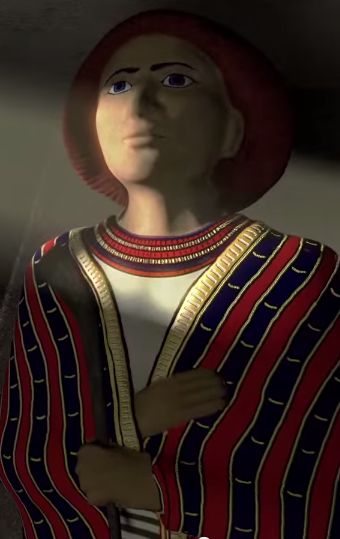
Statue of Joseph

Is this a statue of Joseph? See the film.

[NOTE: When I first published this article in January 2015, it was with the hope of interesting as many people as possible in seeing a then-new film, which was showing in theaters nationwide the next night. The film is no longer in release, but its DVD is now available, so I have modified the content here to reflect that.]


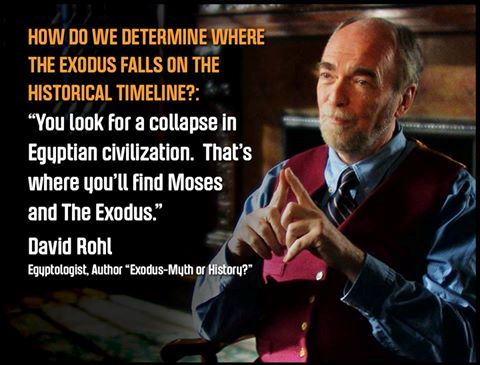
2018 Update: There is a new and expanded feature, added at the bottom of this article. It is a video of two exciting and informative video presentations about the question of the historical accuracy of the Bible’s story of the Exodus, given by highly respected Egyptologist and Historian David Rohl. I strongly urge you to go down there before leaving this site.


There is a new Biblically based documentary film that I recommend to you in the strongest terms, available now on DVD and Blu-ray. The film is Patterns of Evidence: Exodus, and it is director Timothy Mahoney’s journey to answer his personal question, “Is there any archaeological evidence for the story of the Exodus?” It becomes clear right away that Mahoney is not using the film to advance some pet theory of his own, but is indeed letting us watch the unfolding of his process in gaining an answer to his question. And even at the end, when the audience has been made aware of Mahoney’s findings, he doesn’t beat us over the head with them, or vilify or demean those who disagree with them.

The film’s fairness, openness, and honesty are the underpinnings of its ethical as well as its scientific approach to the truth. And perhaps as a result of that, the tone never becomes preachy, sanctimonious, or self-righteous. We’re not talked down to, nor is there any nasty sense of “I know something you don’t know.” In addition to all that, it’s a beautifully shot, well-written and -edited movie that has received, at latest count, 13 showings in and awards from international film festivals.

Mahoney is quite honest in saying that when he, a Christian, asked some of the world’s leading archaeologists and Egyptologists his central question, their response — a flat and unequivocal “no, there is absolutely no evidence of an Exodus event” — it drove him to a crisis of faith. Nevertheless, the film presents these scholars’ views fairly and fully. Even when an alternative approach is provided by other scholars, which suggests that the answer could indeed be “yes,” the film’s innate fair and balanced approach still provides an equal voice to both sides of the issue. Even the 4-minute trailer, which you may watch below, shows that balance. The responses of some of these original naysayers to the suggested new approach to evidence of the Exodus made me think of this quote from Dr. Thomas Sowell: “Considering how often throughout history even intelligent people have been proved to be wrong, it is amazing that there are still people who are convinced that the only reason anyone could possibly say something different from what they believe is stupidity or dishonesty.”

Egypt destroyedI won’t spoil the film’s search route toward an answer, nor reveal what its revelations are, but suffice it to say that it has the capacity to stimulate your mind and feed your spirit simultaneously. My wife and I left the film event invigorated, excited, worshipful, and eager to learn more. How much more could one ask?

Patterns of Evidence: Exodus, the bookThe film has now been released on DVD and Blu-ray, complete with several interesting “Bonus Features” — perfect for after viewing the film when you want still more. A companion book to the film by Timothy Mahoney, titled Patterns of Evidence: Exodus — A Filmmaker’s Journey, has been published. It is chock full of “valuable insights and additional interviews not seen in the film, giving the reader a chance to get know the scholars and their positions better. Filled with beautiful photography of Egypt and Israel, scenes from the biblical re-creations, maps, charts, and diagrams.

As of the most recent updating of this article,
Patterns of Evidence: Exodus is available on Netflix
and for rent or puchase on Youtube.

Mahoney’s organization, Thinking Man Films, is currently in production for a sequel to the film. Here is their teaser for the new film, as found on their website: “After Moses and the Israelites left Egypt, the Bible records they miraculously crossed a mighty sea and traveled on to Mount Sinai where they received revelation from God. Many believe these events changed the history of the world. But, after decades of searching, archaeologists have found no trace of this story. If the Israelites really did journey out of Egypt to a holy mountain, could there still exist a pattern of evidence just waiting to be found?”

Exodus: Myth or History? the bookAfter viewing Patterns of Evidence: Exodus, you will (I predict) want to learn more from and about Egyptologist and historian David Rohl, the expert most important to the overall conclusions drawn by the film. His newest book, timed to coincide with the release of the film, is called Exodus — Myth or History?. It is described as “a book for those who want to examine the evidence in detail, but it is also an absorbing and captivating read.” Rohl was once described by the Archaeology Correspondent for British newspaper The Daily Mail as “one of the most brilliant and original minds now engaged in writing ancient history. If he hadn’t been a historian he would have been a terrific mystery writer.”

And if you still can’t get enough David Rohl, see the short video at the bottom of this article concerning four totally absorbing lectures by Rohl on the subject of the Exodus and early Israelite history (totaling 4 hours 29 min). The subjects are:

  • The Bible — Myth or History?
  • Moses and the Exodus — Fact or Fiction?
  • Who Plundered Solomon’s Temple?
  • Legendary Kings and Chronicles

I’ve watched all four lectures twice, and still can’t get enough.

I would love to know your thoughts, whether or not you see the film.


THE OFFICIAL TRAILER:

INFORMATION ON THE DAVID ROHL LECTURES:


PATTERNS OF EVIDENCE: EXODUS
2018 Update

For those of you have not seen the film Patterns of Evidence: Exodus yet and especially for those who have, I have added a video below that will provide you with amazing additional insights, facts, and theories about the historical accuracy of the Biblical story of the Exodus.

Dr. David Rohl (see above) has become quite well known as the Egyptologist and Historian who has made a major contribution to those fields by creating and proposing a New Chronology for the history of Egypt. Because all dating of other nations and civilizations (including Biblical Israel) is linked to and based on that of Egypt, Rohl’s theories could have a major impact on how we understand all of Biblical history.

Thanks in part to the Patterns of Evidence project, and Rohl’s major participation in finding the right time in Egyptian history into which the Exodus can be seen to fit, Rohl’s theories are being examined very carefully by scholars and the public to see where they take us.

In the video I have posted below, Rohl makes two hour-long presentations for Michael Rood’s “A Rood Awakening” Ministry in Charlotte, North Carolina. In them, Rohl adds credibility and historicity to Israelite history, from Jacob and Joseph all the way down to the post-Solomonic kingdoms. He does this by explaining how, in the various aspects of his New Chronology and other historical formulations he has put forward, they have relevance to Israelite history.

For reasons you will learn in these two presentations below, contemporary scholars have come to the rigid conclusion that there is no historical or archaeological evidence to support a mass Exodus of Israelite people from Egypt, at the time they are “supposed” to be there. Rohl replies that he believes their timing is wrong (he asserts they have made a “huge blunder” in that regard). So if there is no evidence of an Exodus at that time, why not look to see if there is that evidence at some other time. And as the film Patterns of Evidence: Exodus concludes, yes, there is such a time. In the second of the presentations in the video below, Rohl comes to that same conclusion.

 
Here is what you will find in the two presentations:

Program 1: “Shoshenk Not Shishak” (begins at 00:12 on the video)
(Program 1 is truly fascinating stuff, but even David Rohl admits it might be a bigger plateful than you want to chew on right now. But keep reading here, as you will almost certainly want to view Program 2, even if you decide to skip this one.) A little background is important before you undertake either or both of these programs. David Rohl is an agnostic, not a God-believer. However, he does believe that the Bible is as valuable an ancient historical document as any other, and he feels its information should be taken very seriously. In Program 1, “Shoshenk Not Shishak,” Rohl puts forth the case that one major, seminal historical misidentification in the 19th century has completely rendered our dating of ancient Near Eastern history totally inaccurate. As a result of this major chronological misunderstanding, Rohl makes the point that Egyptologists who do not believe the Exodus ever took place (and that’s most of them!) are looking in the right place but in the wrong time period. I will admit that the subject matter in Program 1 is a little technical, and may put you off a bit. However, let me assure you that, if you let him, Rohl has the uncanny ability to bring all of this information down to the level of us mere mortals. This really is a great historical who-dun-it — or perhaps who-misdated-it.

Program 2: “Exodus: Myth or History?” (begins at 55:05 on the video)
At the beginning of this program, David Rohl candidly states, “You’ll be pleased to know that Round 2 is a lot easier to take on!” If this program doesn’t grab your attention and amaze your mind, I will be very surprised. Here are the questions he takes on in Program 2:

  1. Why have scholars almost universally come to believe that the Exodus, the conquest of Jericho, and much of the Bible’s historical accounts are myth, and not fact?
  2. Was Ramesses II (“the Great”) the Pharaoh of the Exodus?
  3. Is there historical evidence that Joseph existed and rose to high levels of power in Egypt? Is there evidence of 7 years of plenty followed by 7 years of famine?
  4. Is there evidence that a group of Semitic people came to live in Egypt at the invitation of Pharaoh? Is there evidence they were affiliated with Joseph?
  5. Is there any evidence that would show that Moses could have written the first five books of the Bible in early Hebrew?
  6. Who was the Pharoah ruling at the time of Joseph? Later, if it wasn’t Ramesses II, who was the Pharaoh of the Exodus?
  7. Is there any historical evidence of Joshua and the conquest of the Promised Land?

Don’t you want to know the answer to all of these?

TWO PRESENTATIONS ON THE EXODUS BY DAVID ROHL


ARTICLE © 2015,2018, DR. GROVER B. PROCTOR, JR. — ALL RIGHTS RESERVED


Tags: , ,